"Equity represents the value that would be returned to a company's shareholders if all of the assets were liquidated and all of the company's debts were paid off. We can also think of equity as a degree of residual ownership in a firm or asset after subtracting all debts associated with that asset."
A. Values-table
B. Dimension-Tables (the Who, Stakeholders)
1. Species: Humans, Non-humans),
2. Individual: (Selected few, Other)
C. Value-Influencing-Factors
---
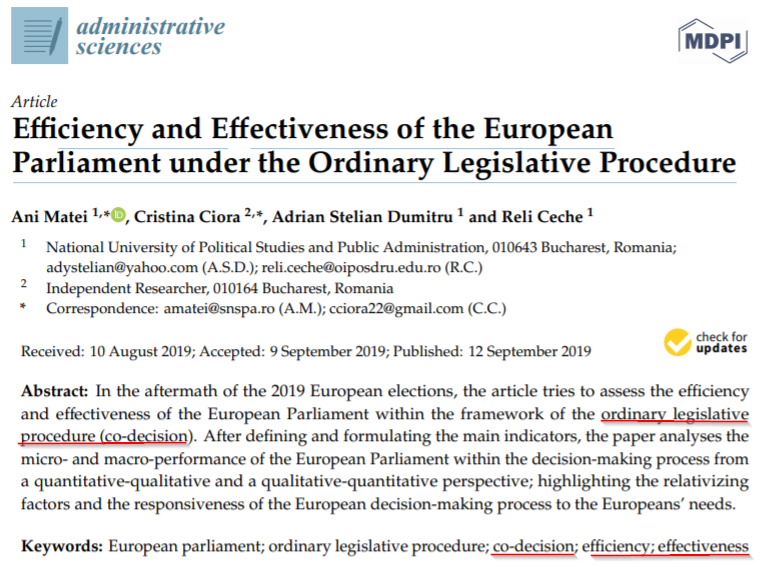
Decision process - Co-decision
"Efficiency and Effectiveness of the European
Parliament under the Ordinary Legislative Procedure"
---
Kant
A free (autonomous) will (desire), which lead to that I impose procedure (freely) upon myself.
As opposed to obey a desire (will), I have not chosen freely = heteronomy.
To chose the
The motif
https://www.youtube.com/watch?v=8rv-4aUbZxQ&index=6&list=PL30C13C91CFFEFEA6
----
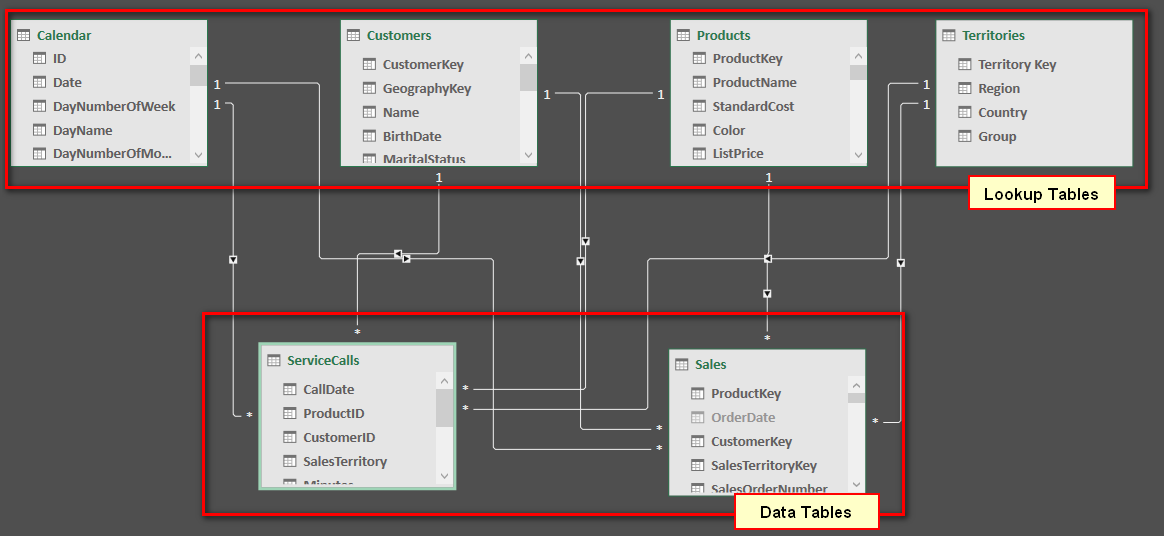
Dimensional Tables are resources: Time is a resource, Customers, Products, Territories, etc
View them as a stock. The process change the stock (value). They are a prerequisite for the process but has no other value (a warehouse has no value without transactions). So the true value is Process by Resource (turnover. Profit shows the distribution).
Similar conclusions; Resources to create Value. Separate the Process-(flow)-table from Measure-table (current state). Then add a Desired-state-table --> a Control center. And do likewise starting from Resources ('current' state) and Resources ("available" state).
Human 100 trillion cells --> 23 chromosome Metabolomics:
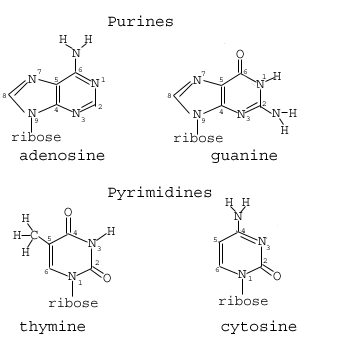
Video: https://youtu.be/tMDAd-owChk?t=531 60% from metaboliceed by humans, 30% by food/external, 10% by bacterias Biological function = Gene "A gene is the basic physical and functional unit of heredity. Genes, which are made up of DNA, act as instructions to make molecules called proteins. The Human Genome Project has estimated that humans have 20-25,000 genes." Base = ACGT In humans, genes vary in size from a few 100s to more than 2 million bases. DNA = ACGT (T only DNA, U only RNA) Source
Source: http://www.dailygalaxy.com/my_weblog/2017/08/biological-teleporter-could-seed-life-through-galaxy.html DNA Defragmentaion is allowed!
Video: Yellow is the target of the Human Longevity Inc. link
Predictions from DNA. Some predictions also can be made from the voice
Video: link + interestingly your DNA codes for age16-18. The switch from blue to green photo-receptors, has happened 4 times - independantly https://youtu.be/tMDAd-owChk?t=983 --> constantly shoot-out new roots --- Stearing: Resoures (incl. info.=advice), Rules, Targets Reference: Softer form of stearing
---
Social reflexes: yawning , general
Social imprinting: link
---
Energy needed per person
Solar panels: 100 x 100 mile for 320million --> ca 9 x 9 meter per person
Battery: 1 x 1 mile --> 10 x 10cm ? per person
Usage: 1/3 heating, 1/3 transportation, 1/3 electricity
From Genology to Memogy
Neurons like to work.
Epi-genetics: Genetic changes by Environment (in plants)--> Enviro-genetic ...I knew it.
Through these observations and sophisticated statistical modeling, Houle and his team were able to determine that the small mutational changes occurred in the same pattern as evolution throughout the entire group of fly species.
The findings are likely applicable to how other plants and animal species evolved, Houle said. But they also are predictive of the next 40 million years of evolution as well, he added.
"What we are doing is more accurately known as a retrodiction -- using something from the present to predict past events," Houle said. "Of course, we can now make a prediction that Drosophila will evolve in this pattern in the future, as well."
---
Fruit fly mutation foretells 40 million years of evolution
"What we are doing is more accurately known as a retrodiction -- using something from the present to predict past events," Houle said. "Of course, we can now make a prediction that Drosophila will evolve in this pattern in the future, as well."
Youthful plasticity restored to brains of aging mice
"It's exciting because it suggests that by just manipulating one gene in adult brains, we can boost brain plasticity,"
"This has implications for potentially reducing normal cognitive decline with aging, or boosting recovery from brain injury after stroke or traumatic brain injury," he says. Additional research will need to be done to determine whether plasticity in humans and mice is regulated in the same way.



















 ..
..