10 May 2013

Infographics fonts

'Power Plants': How to Harvest Electricity Directly from Plants

Ramaraja Ramasamy, right, and Yogeswaran Umasankar work together to capture energy created during photosynthesis.

Plants are the undisputed champions of solar power. After billions of years of evolution, most of them operate at nearly 100 percent quantum efficiency, meaning that for every photon of sunlight a plant captures, it produces an equal number of electrons. Converting even a fraction of this into electricity would improve upon the efficiency seen with solar panels.

During photosynthesis, plants use sunlight to split water atoms into hydrogen and oxygen, which produces electrons. These newly freed electrons go on to help create sugars that plants use much like food to support growth and reproduction.

In small-scale experiments, this approach resulted in electrical current levels that are two orders of magnitude larger than those previously reported in similar systems. "In the near term, this technology might best be used for remote sensors or other portable electronic equipment that requires less power to run" 

Source: link

01 May 2013

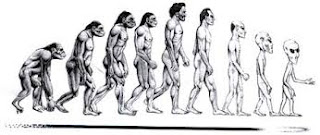
Evolution


Inventions comes first (the fun of solving a problem),
then we figure out how far we can go with our new tools. Now where will it happen, and under what morals...
So can we set a path with enough inertia today to take us to where we want to be - our legacy.

21 April 2013

Animated overlapping of diseases


Animated overlapping of diseases well done.

Source: link

16 April 2013

Most Powerful Microbatteries


The most powerful batteries on the planet are only a few millimeters in size, yet they pack such a punch that a driver could use a cellphone powered by these batteries to jump-start a dead car battery -- and then recharge the phone in the blink of an eye. 

"This is a whole new way to think about batteries," The new microbatteries offer both power and energy, and by tweaking the structure a bit, the researchers can tune them over a wide range on the power-versus-energy scale.
With so much power, the batteries could enable sensors or radio signals that broadcast 30 times farther, or devices 30 times smaller. The batteries are rechargeable and can charge 1,000 times faster than competing technologies
"Any kind of electronic device is limited by the size of the battery -- until now" ... like RFID.

Source: link

Unpublishded: 2D semiconductors (0,7nm x 15layers), 

14 April 2013

What makes us feel good about our work (and life)?


Purpose & Progress; appreciated progress towards a purpose
Builders v.s. Evaluators; the process & the end product
Efficiency & Meaning; putting meaning in each step of the process.
Teamwork, department, company, society, humanity, life; scales of layers of the above.


Unpublished: Science litteracy & Std of living, ROI/ROC (output/input)

07 April 2013

What is your social class?

People in the UK now fit into seven social classes, a major survey conducted by the BBC suggests. More than 161,000 people took part in the Great British Class Survey (the largest study of class in the UK.). Take the Quick test. This research suggests that class has three dimensions - economic, social and cultural.

  • Elite - the most privileged group in the UK, distinct from the other six classes through its wealth. This group has the highest levels of all three capitals
  • Established middle class - the second wealthiest, scoring highly on all three capitals. The largest and most gregarious group, scoring second highest for cultural capital
  • Technical middle class - a small, distinctive new class group which is prosperous but scores low for social and cultural capital. Distinguished by its social isolation and cultural apathy
  • New affluent workers - a young class group which is socially and culturally active, with middling levels of economic capital
  • Traditional working class - scores low on all forms of capital, but is not completely deprived. Its members have reasonably high house values, explained by this group having the oldest average age at 66
  • Emergent service workers - a new, young, urban group which is relatively poor but has high social and cultural capital
  • Precariat, or precarious proletariat - the poorest, most deprived class, scoring low for social and cultural capital

01 April 2013

Non profit organisations & CEO Salaries


"Activist and fundraiser Dan Pallotta calls out the double standard that drives our broken relationship to charities. Too many nonprofits, he says, are rewarded for how little they spend -- not for what they get done. "

Charity to who: TED video, via blog post, charitywatch
...'dividend transfer' from the profit to non-profit sector...how inefficient when taxes is not an option.

Unpublished: How to create high profit, Bibliotekstoppen - Ekonomi, Economic democracy (company governance), DN, The employees are never a problem

29 March 2013

The Art of Compliment


"Linguists love categorizing things and, by analyzing thousands of nice things people say to each other, they’ve developed three ways of easily pigeon-holing any given compliment. The first step in coding a compliment is working out if it’s formulaic or non-formulaic. You see, perhaps the most surprising thing about most compliments is how similar they are to one another—in fact, they’re downright unoriginal."

Source: link

Unpublished: Coffe/Tea and cancer (Caffeine-'Addicted' Bacteria), Households by income group

26 March 2013

3D Printing revolution - shapeways


Make anything you can imagine: Shapeways, source, further
The 3D printers are today roughly where the PC was in the 1980s.

Updated: 4Dprinting

24 March 2013

Importance in Life for Happiness (OECD Life Index survey)

Picture: What is Important in life (OECD Life Index survey)?

There is more to life than the cold numbers of GDP and economic statistics – This Index allows you to compare well-being across countries, based on 11 topics the OECD has identified as essential, in the areas of material living conditions and quality of life.

How to measure happiness and why it matters

On the International Day of Happiness, 20 March 2013 the OECD released a detailed set of Guidelines on Measuring Subjective Well-being. This is essentially a handbook for statisticians involved in collecting and publishing information on subjective well-being (measures of life satisfaction, happiness, and similar concepts).

The vision comes from Bhutan
Leading the movement to remake what we measure has been the tiny, mountainous Asian nation of Bhutan, population of 740,000. Its goal is "Gross National Happiness.


Source: OECD, Huffington Post, 

18 March 2013

17 March 2013

Programming life? Look for Low complexity

Good to find others with a similar sense, but a different aim.
"Both art and science are by-products of the desire to create / discover more data that is compressible in hitherto unknown ways!" 

"Add two successive Fibonacci numbers such as 1, 2, 3, 5, 8, 13, ... and you'll get the next. The corresponding ratios 1/1, 1/2, 2/3, 3/5, 5/8, 8/13, 13/21, 21/34, ... converge to the harmonic proportion: 1/2 (square root of 5) - 1/2 = 0.618034... This so-called golden ratio divides the unit interval into segments of lengths a and b such that a/b=b. So the inverse of 0.618034... is 1.618034... whose square is 2.618034... etc. Many artists claim the human eye prefers the golden ratio over others.". link
--> successive improvements, can felt/know by a simple KPI.
Beauty is a stage, interesting is a move in the right direction.

"The algorithmic information or Kolmogorov complexity of a bitstring x is the length of the shortest program that computes x and halts. This is one of the fundamental concepts of theoretical computer science.". link
--> computers use dual digit language; bits. Life (most likely) use a different algorithm, built on a multi-digit language - from x-number of atoms. Recursive learning; learn to read, test write, evaluate.

It comes in all senses; visual, auditory, ... etc (incl. balance).

Future predictions:  "A flat minimum is a large connected region in weight-space where the error remains approximately constant.": link, pareto from the normative

And more, more, and much more...

16 March 2013

Language development


What we need is a new genre, a metaphorical language that is coherent to both the scientist and the metaphysician.

Memo
The theoretical perspective involves a brief survey of the general concept of principle as well as an analysis of different flavors of principles. A key distinction is made between scientific principles and normative principles. Scientific principles are laws or facts of nature and form the fundamental truths that one can build upon. Normative principles are rules of conduct that guide/restrict behavior. While scientific principles hold “naturally”, normative principles need explicit “enforcement”.

Definitions
ARCHITECTURE: Those properties of an artifact that are necessary and sufficient to meet its essential requirements.

POLICY: A purposive course of action followed by a set of actor(s) to guide and determine present and future decisions, with an aim of realizing goals.

SCIENTIFIC PRINCIPLE: A law or fact of nature underlying the working of an artifact.

NORMATIVE PRINCIPLE: A declarative statement that normatively prescribes a property of something.

ARTIFACT: Something created by humans usually for a practical purpose.

Normative principles in this phase can best be referred to as being a credo.
CREDO: A normative-principle expressing a fundamental belief.


Once credos have been (re)formulated such that they are specific enough, we can start to refer to them as a norm. 
NORM: A normative principle in the form of a specific and measurable statement.


It should be noted that the distinction between architecture and design is orthogonal to the distinction between requirement (what),normative principle(declarative how) and instruction(operational how).

The term principle is said to originate from the Latin word of principium (Meriam-Webster 2003), which means ‘origin’, ‘beginning’ or ‘first cause’. As summarized in Paauwe (2010), Vitruvius, an architect in ancient Rome, already used the concept of principles to explain what is true and indisputable, and should apply to everyone. Vitruvius considered principles as the elements, the laws of nature that produce specific results. For instance, he observed how certain principles of the human body, such as symmetry and proportion, ensure ‘perfection’. 

Source: link, Scribd

Society model

The American philosopher John Rawls wrote a theory of justice. In his work he described what he called the Original Position. This is the fictive starting point where humanity was free to develop core principles for society from a greenfield point of view. To achieve that greenfield status, they had to sign a veil of ignorance contract . This contract was to make sure they wouldn’t get influenced or biased. They determined two core principles: liberty and equality. It was then also determined that stakeholders would prefer justice as fairness above utilitarianism. So they in fact preferred a balanced fairness above a maximized utilizing of happiness. Now if we map that to our world with all it’s crises, what would happen if we all followed the justice as fairness principle? Could this stop the endless utilitarianism strategies? Could it make us accept that endless growth is not sustainable? And that maximizing happiness could in fact just be an illusion? Could this be the key?

Source: link

Another reinforcement for the General model; with stakeholders and values.

Precision Grammar for Programming Cells

An unprecedented collaboration among academia, industry, government and civil society has resulted in the launch of a professional-grade collection of public domain DNA parts that greatly increases the reliability and precision by which biology can be engineered.

They have, in effect, established rules for the first language for engineering gene expression, the layer between the genome and all the dynamic processes of life. The feat is all the more remarkable considering that just a few years ago several prominent scientists claimed that it would be impossible to develop frameworks enabling reliably reusable standard biological parts. 
The DNA sequences that encode all parts and the data about them are free and available online.

Source: link