28 March 2016

Collection of Charts

Just for fun...

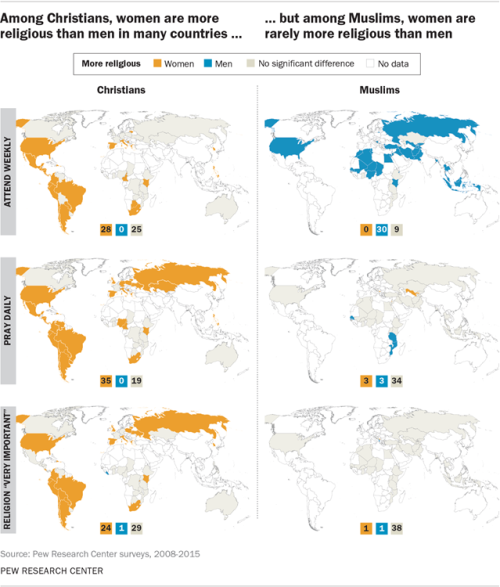
Picture: I found it interesting to look at conflict areas like Ukraine; Crimea...etc 


Picture: Why is this


Picture: Are you living in the past or the future ?


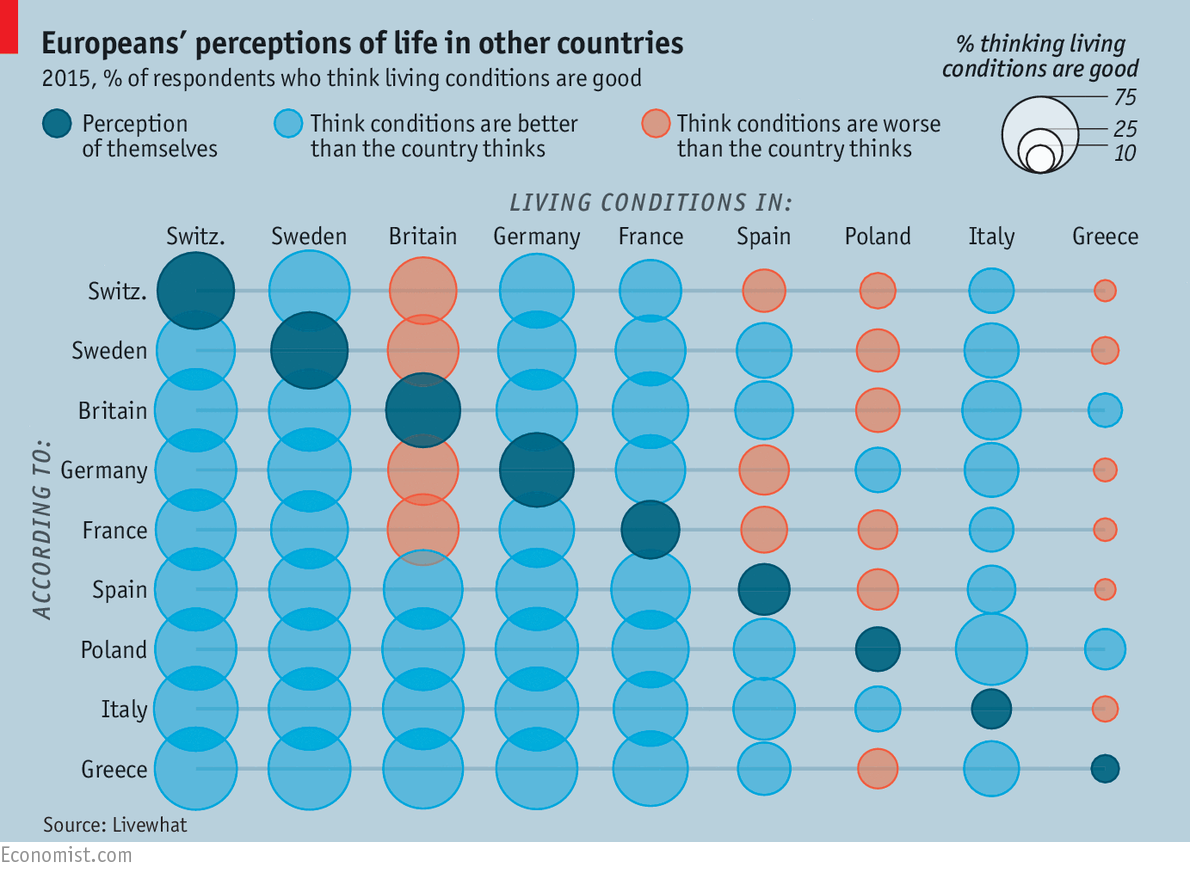
Picture: Is the grass greener elsewhere ?


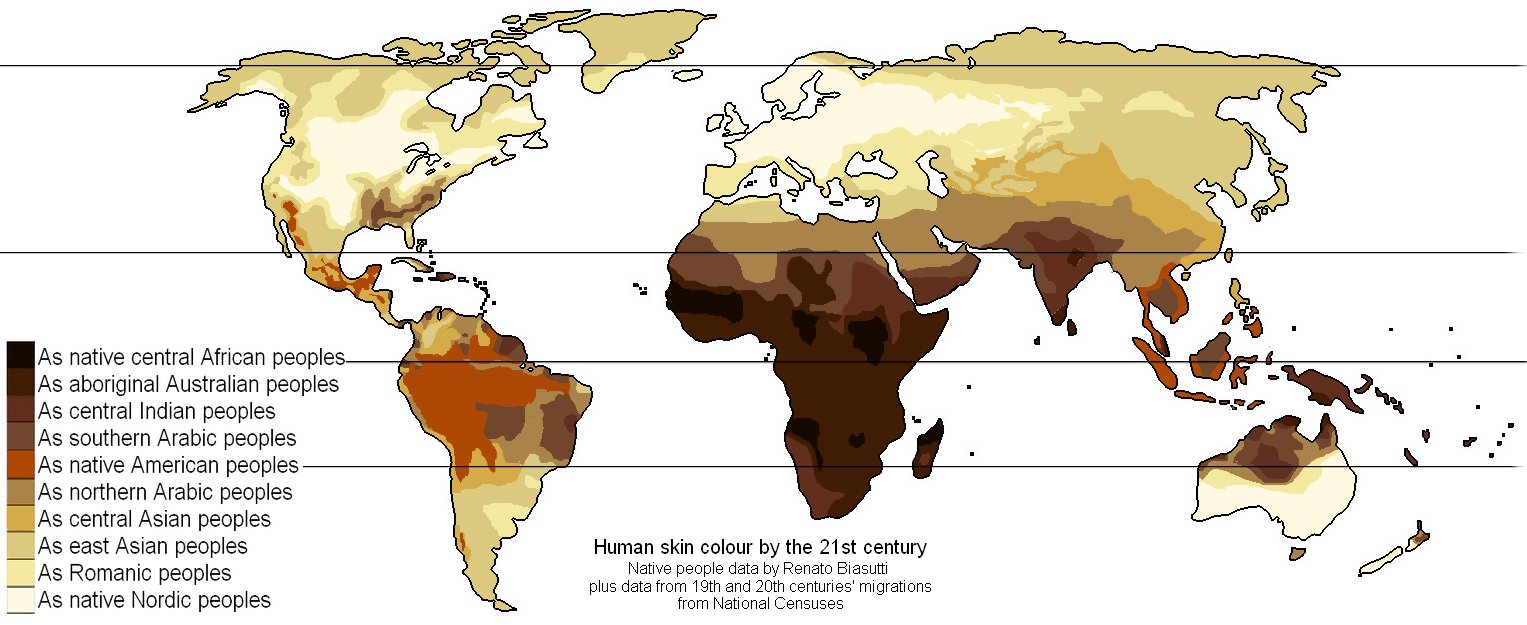
Picture Would be interesting to compare with the number of Sun-hours


Picture: Only interesting for Scandinavians

Democracy v.s. Nationalism


Picture: NDI "what we have learned" (National Democracy Institute)


-------------------------
US first undemocratic leader ?


Picture: The last time it ended with war (Swedish, English)


The common denominator is that people want some change.
The new leaders are - once again, media simplistic - black or white 'in or out'.
The wrong people should get out, be thrown out, or be cleansed out - depending on how much they resist the changes.
Like always, controlled by a few. Fuelled by bigger carrots to the in:s and bigger sticks for the out:s.
And like always, in the beginning the leaders thinks everybody are with them. But gradually they feels everybody are against them.

Weekend - The Framework is almost complete :-)

Picture: Fact or Flavour.

----------------------------------


Image result for organisation chart
Picture: Influencing Factors, at various Depth. Influencing The Output* (Measure)
Each Factors have a certain Position; Factor(Depth;Time)

Output = The Set Predictor (measure~what we value)

Level 3: "Pre-Scribe" - not a good word
Level 2: Pre-Dict/Pict
Level 1: DeScribe/DePict

Measure(Factor[Depth;Time])
If we work with a granularity we can


-----

Royal Swedish Library

Uppdraget (sida 17)
Sveriges nationalbibliotek svarar för insamling av och tillgång till fysiska och 
digitala medier (information) till förmån för forskning och samhälls-utveckling, samt har nationell överblick och utvecklar biblioteksväsendet i samverkan enligt uppgifter i 
förordning (2008:1421) med instruktion för Kungl. biblioteket (KB)

Purpose:
to Get, Catalogue, Publish Information (make it available)
for Research&Development, to benefit Anyone and the Society,.


Course: Ämnes-ords-katalogisering (Klassifierings dokument.pdf)

Describe: 
1. de grundläggande principerna, 
2. hur man gör en ämnesanalys (ämne/disciplin), 
3. av en resurs (verk), 
4. och hur man indexerar med kontrollerad vokabulär. 
riktlinjer, olika verktyg.

DEWEY: När ämne och disciplin är bestämt, går katalogisatören över till schemat (om tillämpligt, inriktning/genre eller form). Vägledande princip; simple to use and produce (klassificra/re-klassificera)

1. Bestämma ett verks ämne (main subject/s)
Författarens intention, avgör ämnes-klassifikationen 
Via Strukturen: Titel, Innehållsförteckning
Via Baksidan, Sammanfattningen, Inledningen, Texten
Via Källorna

2. Bestämma ett verks disciplin (syfte = huvudämne)
Verket klassas under den disciplin som det är avsett för,
snarare än under den disciplin från vilket det kommer.


3. Vägvals-principer
Ett verk kan innehålla flera ämnen som behandlas separat, eller
i relation till varandra ur en 
enda disciplins synvinkel. 
Regel1: (=purpose)
Ett verk som behandlar flera ämnen i relation till varandra
klassificeras under det ämne 
som påverkas (användaren avsikt/syfte).
Detta kallas för tillämpningsregeln och har företräde framför alla andra regler. 

Exempel: Någon köper ett fordon, men avsikten är att transportera. 
Så producenten kan säga sig arbeta inom a) fordons-leverantörs-, eller b) transport-branschen.

Regel2: (=depth)
Behandlas mest utförligt 

Regel3: (=sequence)
Behandlas först, av flera (ex. första landet i raden av länder)


Klasser
000 Datavetenskap, information & allmänna verk 
400 Språk
800 Litteratur 

100 Filosofi & psykologi 
300 Samhällsvetenskaper 

700 Konstarterna & fritid 
200 Religion 

500 Naturvetenskap 
600 Teknik 

900 Historia & geografi 

FAST= Facetted Application of Subject Terminology
Allmänna ämnen (650)
Personnamn (600)
Institutionsnamn (610)
Händelser (611, bl.a. alla krig)
Titlar (630)
Tid (648)
Geografiska namn (651)
Genre/form (655)


-----
Astrakan: Effektiva möten
Trade: Förhandlings-möte
Process: Arbets-möte ... Designed for Purpose (what/why)
Control: Besluts-möte
Coordinate: Avstämmnings-möte  ...med/mot-arbetare
Resource: Informations-möte

Veta (om substantiv)v.s. Kunna (om verb)

Ledare: Vision/Mål/Strategi
Chef: Genomförande/Struktur/Resurser
Coach: Relation/Motivation

Focus, Process, Possible

06 February 2016

Breakthrough with Bio-sensors + Quantum heat transport


The next generation of ultra-sensitive sensors, could depend on near atomic scale cracks/nanogaps, allowing individual signals of a biomarker molecule caught in the gaps to stand out. The presence of such a molecule would be indicated by a change in the scattering of light.

Source: ScienceDaily
---------


Quantum computer is prone to errors due to external noise. A new innovation may be utilized in cooling quantum processors very efficiently and so cleverly that the operation of the computer is not disturbed. Möttönen's research group succeeded in measuring quantum-limited heat transport over distances up to a meter, where previously scientists have been able to measure such heat transport only up to distances comparable to the thickness of a human hair.

Source: ScienceDaily

----
Undocumented: Visualisation Theory

----
The RoadMap to exploring Life in the universe, or....
"...study of the origin, evolution, and distribution of life in the context of cosmic evolution; this includes habitability in the Solar System and beyond."

AstRoMap website

----
Syntetic Life
worlds first minimal synthetic bacterial cell
Picture: 473 genes to make a life-form - the first record to be broken (source).

"32% (149/473) of this organism's genes are of unknown biological function, suggesting the presence of undiscovered functions that are essential for life.  All the bioinformatics studies over the past 20 years have underestimated the number of essential genes by focusing only on the known world."

17 January 2016

One Day - from a Human perspective

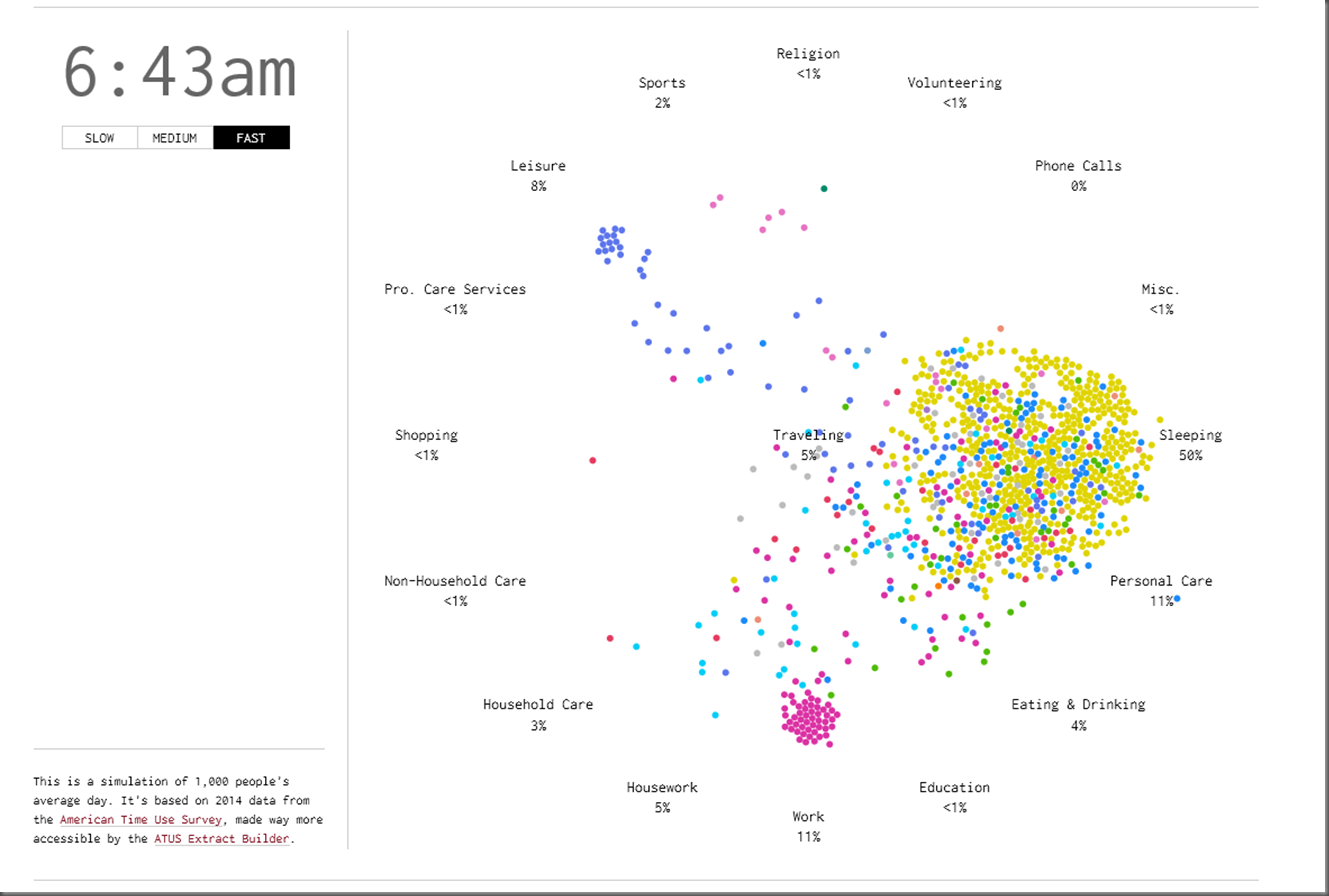
One of the more effective data visualizations I’ve seen in a while, this animated visual is a time-varying Markov chain developed by Nathan Yau of FlowingData.  This is a simulation of 1,000 people’s average day. It’s based on 2014 data from the American Time Use Survey, made way more accessible by the ATUS Extract Builder.

image
Picture: The flow of activities between functions (cross process). Could also be the output

Source: link


Skills
1. Reprocess: imitation, repeat
2. Discover/Develop: find/make


-----

To change behaviour; Control/Governance

Step1: Habitual behaviour (@ Posterior cingulate cortex)
Trigger --> Behaviour --> Reward
Driven by rewards/result.


Step2: Cognitive control (via Pre frontal cortex)
Trigger --> Awareness --> Compare --> New behaviour (abstain) --> New reward (joy of letting go)
Driven by curiosity/joy of letting go, but Sensitive to stress


27 December 2015

Value Added Statement (VAS) - Trade Statement (TS)


Picture: Value added statement, or Trade statement; traded (sold/purchased) by the trader.


The Value Added Statement (VAS) show the value added by a company in the past fiscal year as its Contribution to the GDP (Gross Domestic Product/Value) of its Home country, and how it is appropriated.  
It is regarded as a part of social responsibility accounting (link).


A Value Added Statement (or Trade statement) is like a Balance sheet for an Income statement.

Balance sheet
A Balance sheet: Assets (by mobility) - Liabilities (by owner) = 0
Is a summary of 'All Resources with Financial Attributes'.
Shows a Point in Time

Income Statement
A Value Added Statement: Trades (out) - Trades (in) = 0
Is a summary of 'All Trades with Financial Attributes'.
Shows a Change in Time

Turnover (of resources)
Old: Turnover = Sales revenue ÷ Assets
New: Turnover = Resources (@ customer/stakeholder) ÷ Resources (@ producer/supplier)
Pushing the 'resource value' back in the process is one way to eliminate waste

Trade StatementI prefer to call it Trade Statement' instead of Value Added Statement'.
Why ?
* Bend 'Trade' and it still gives the right associations; a trade, to trade, traders
    Compare with "a contribution, to contribute contributors".
* ...

Trade statement (trades, traders)
Output: Products & Service, sold (purchased by Customers)
Input: Products & Service, purchased (sold by Suppliers)
=Gross value
Process: Depreciation, adjustment
=Net value
----
Process: Labour (sold by employees)
Process: Interest (sold by creditors)
Process: Dividend (sold by shareholders)
Process: Taxes (sold by society)
Process: Retained earnings (sold by the organisation/company)
=0 (all trades between all traders)


Trader What                   2012
Customers Sales revenue 192 676 100%
Other Other income 24 652 13%
Suppliers Cost of materials -122 450 -64%
Other upfront expenditures -22 077 -11%          Excl. Out+In
Misc Depreciation and amortization -13 135 -7% Σ: -59 667 100%
Employees Wages, salaries, benefits -29 503 -15% -29 503 49%
Creditors Interest expense -3 957 -2% -3 957 7%
Societies Taxes, duties -4 322 -2% -4 322 7%
Shareholders Dividend (or proposal for) -1 639 -1% -1 639 3%
The company Retained earnings -20 246 -11% -20 246 34%
Table: VW Value Added Statement 2012


The categorizations are not 100% perfect, but it shows the direction - the vision. 
Justice is governed by fair/just trade. What's just is relative to most people. 
Good accounting/categorisations/labellings makes it debatable/manageable by a justice system. 
A communications framework. 

Effectiveness & Efficiency
Effectiveness can be measured from One or All Traders perspective.

Picture: Efficiency = same Output with less Resources. Effective = more correct Output

Effectiveness can be measured as
a) Internal - from our set targets, or
b) External - from the traders targets.


Picture: Analytical framework

Current state
1. Understand the Output; What=Current state,
    Understand the Input+Process; Why=Root cause (the Influencing factors)
2. Understand the Function; Output = Process({Input n}). Predict the output
Desired state
3. Understand the Output target; use the Function to get the desired Output
Note: Here Output=both the Product and the Effect (outcome)


Picture: Development of Product/Process + Fed by a) Vision, or b) Unsolved problems


Picture: SmarterDraw


Control resilience theory (link)
"Once you identify the relevant parameter that controls the system's resilience, you can begin to tackle how to manipulate that resilience--how to enhance resilience or restore resilience"


Picture: Decisions are based on Comparisions; if(comparision;if-true,if-false)

Comparators. =/≠,</>.
Compared to a Norm/Target/Desired state, Vision/Mission.
AND: all comparisons must be true. OR: none can be false.
Boolean: compare(sum(comparisons))
Set: can be dimensions like {true, false, other}, or measures/numbers

The process of Computation is a (one form of) transformation of measures/numbers.
A process is time based sequence, also called algorithm.
Efficient process=least resources (incl. time)


Picture: Same conclusion (different illustration)


Always happy to see when others have come to the same conclusion:


Picture: Source cbsolutions.net
-------


Picture: source


Picture: source


Links: Google search, pdf, Mapping all Braincells

23 December 2015

Mathematical theory & Model - another weekend


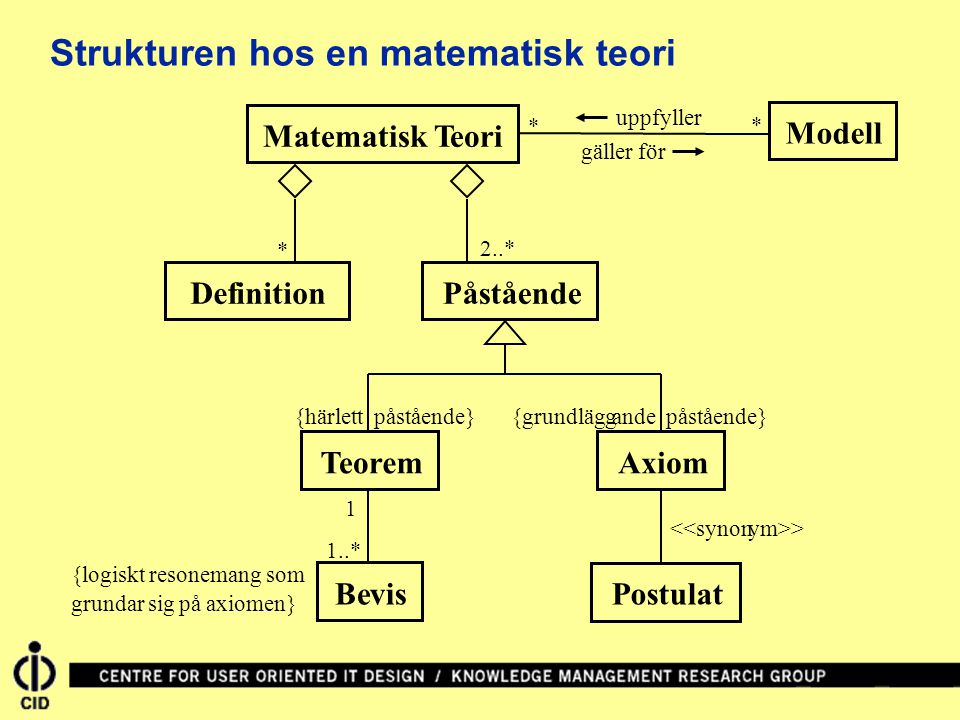
Picture: The Development of Mathematical theory; Fundamental+New. Builds a model.


•Modern development: A lesson learned by mathematics in the last 150 years is that it is useful to strip the meaning away from the mathematical assertions (axioms, postulates, propositions, theorems) and definitions.
•One must concede the need for primitive notions, or undefined terms or concepts, in any study. Such abstraction or formalization makes mathematical knowledge more general, capable of multiple different meanings, and therefore useful in multiple contexts. 

•Structuralist mathematics goes further, and develops theories and axioms (e.g. field theory, group theory, topology, vector spaces) without any particular application in mind. 
An axiom or postulate is a premise or starting point of reasoning. As classically conceived, an axiom is a premise so evident as to be accepted as true without controversy.
In mathematics, a theorem is a statement that has been proven on the basis of previously established statements, such as other theorems—and generally accepted statements, such as axioms. 
Conclusion: A mathematical theory is a (just) building block, when we build a model of the world. The lattice for resources - a set of rules. Separate between Context (sammanhang), Content (innehåll) och 
Operations can involve mathematical objects other than numbers. 
* The logical values true and false can be combined using logic operations, such as and, or, and not. 
* Vectors can be added and subtracted.
* Rotations can be combined using the function composition operation, performing the first rotation and then the second. 
* Operations on sets include the binary operations union and intersection and the unary operation of complementation. 
* Operations on functions include composition and convolution.

Quanta: 

Set:
Operations on sets include the binary operations union and intersection and the unary operation of complementation.
The logical values true and false can be combined using logic operations, such as and, or, and not. 
Logics: True, False. AND(A=B), OR(A+B), >,<

Group: 
In mathematics, a group is an algebraic structure consisting of a set of elements together with an operation that combines any two elements to form a third element. 
Arithmetic: A+B:  A=Operand, +=Operation (+,-,x,/=arithmetic operators, unicode)
 Unary: --1, -+1 (one operand), 
 Binary: 1+1 (two operands), 
 Ternary: If(A;True, False)
Postfix: 2!, Prefix: sin(x)

Argument:
f(x) = x^2, x is called an argument, and since it's one argument it's an unary function.
f(x,y) = x^2 + y^2, is a binary function.
The number of arguments that a function takes is called the arity of the function.

Function:
Diagram 
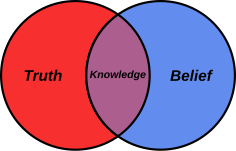
Picture: f(x) is similar to f(x) = Process(Resources). Concept. Belief


Category is an algebraic structure that comprises "objects" that are linked by "arrows".


Two types of resources: 
a) Type1: Is a state (finite/consumed/scarce, has potential) : Time, Money, Energy, etc
b) Type2: Is a description (meta, propagates, expressive/cognitive) : Information, 

Philosophy (Information --> knowledge (epistemology) --> wisdom (fundamental insight) ---> mathematics 
A codified expression is called a language (any form), which makes it cognitive - possible to become aware. Sign (can be interpreted/semiotic) or Concept (sv. begrepp/gripbar). 
Research & Development precedes any robust (mathematical/fundamental) Proof of Concept.

Analyte (analytical chemistry/methods) = something you want to analyse/measure, quantitative.
Through metrology (=science of measure), 
Human sensory analysis = something you can perceive/sense/feel, qualitative - good/bad for some reason.

Value lies in the ethical domain (good/bad) - as outcome - need a evaluator (stakeholder, sv. intressent).

---
The human brain has 86billion neurones and trillions of connections. 
How many computers (or what software with feedback) does it takes to come up with something equivalent - with a slow moving equilibrium. 

----
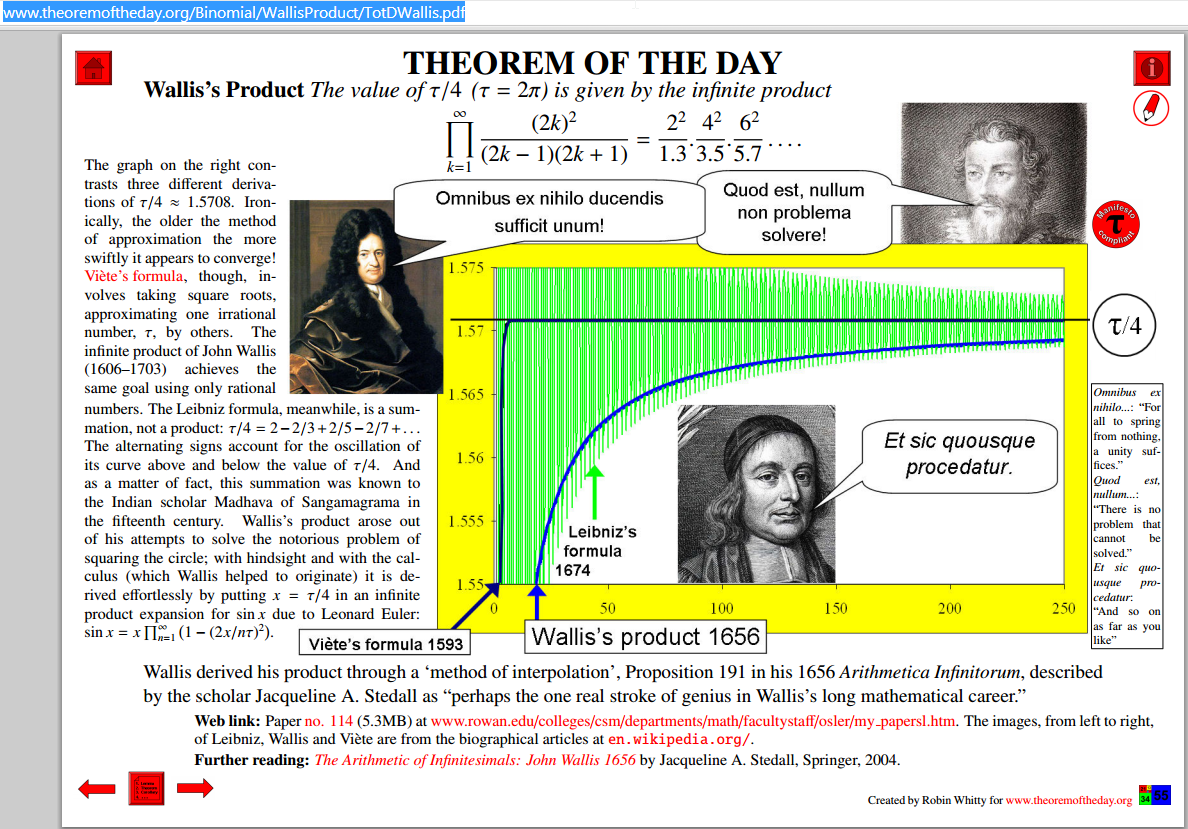
Pi found in quantum physics (Wallis product), though most efficient is Viète's formula.

---
Ethics: What you see is what you get
DNA motor: 1000x faster. Now 1/10 of what Natur can do

Expressions
Semantics is the study of meaning. Formal semantics is about attaching meaning to expressions.
Being an expression is a syntactic concept. An expression must be well-formed;  2+3 is well formed, but the expression *2+ is not.

Calculus - change, over time (requirement)
Note: 
Calculus is change, and requires time. 
Geometry is space, and requires time. 
Algebra is 
Calculus is the mathematical study of change, in the same way that geometry is the study of shape and algebra is the study of operations and their application to solving equations. It has two major branches, differential calculus (concerning rates of change and slopes of curves),[1] and integral calculus (concerning accumulation of quantities and the areas under and between curves);[2] these two branches are related to each other by the fundamental theorem of calculus. Both branches make use of the fundamental notions of convergence of infinite sequences and infinite series to a well-defined limit. Generally, modern calculus is considered to have been developed in the 17th century by Isaac Newton and Gottfried Leibniz. Today, calculus has widespread uses in science, engineering andeconomics[3] and can solve many problems that algebra alone cannot.
Calculus is a part of modern mathematics education. A course in calculus is a gateway to other, more advanced courses in mathematics devoted to the study offunctions and limits, broadly called mathematical analysis. Calculus has historically been called "the calculus of infinitesimals", or "infinitesimal calculus". The word "calculus" comes from Latin (calculus) and refers to a small stone used for counting. More generally, calculus (plural calculi) refers to any method or system of calculation guided by the symbolic manipulation of expressions. Some examples of other well-known calculi are propositional calculus, calculus of variations,lambda calculus, and process calculus.